Miss Dior: The History and Evolution of Dior’s Iconic Fragrance Line
Origins: Christian Dior’s First Perfume (1947)
Miss Dior was introduced in 1947 as the first fragrance from the House of Christian Dior, founded in Paris in 1946. Its launch coincided with the designer’s first haute couture collection, presented on 12 February 1947 at 30 Avenue Montaigne. The collection introduced the silhouette subsequently known as the New Look, characterised by a cinched waist, rounded shoulders and voluminous skirts.
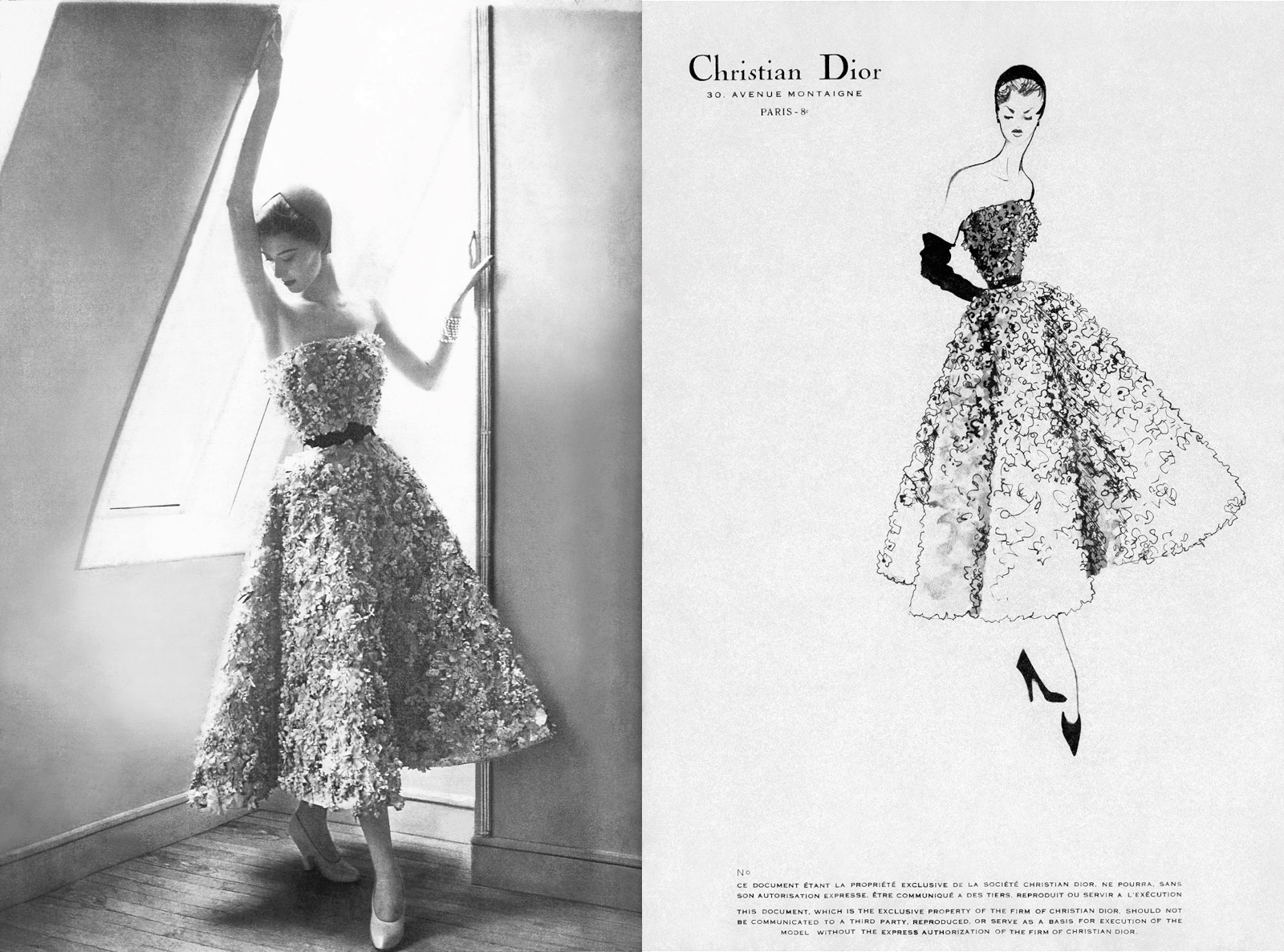
Christian Dior’s New Look collection, presented in Paris on 12 February 1947, introduced the couture aesthetic that accompanied the launch of Miss Dior
The perfume was conceived as an olfactory counterpart to this new vision of femininity. Christian Dior commissioned perfumer Paul Vacher to create the fragrance, expressing his intention with the request:
“Make me a perfume that smells of love.”
According to the fashion house, Miss Dior was sprayed throughout the salons during the inaugural fashion show, establishing an immediate connection between the perfume, the collection and the atmosphere of the event.
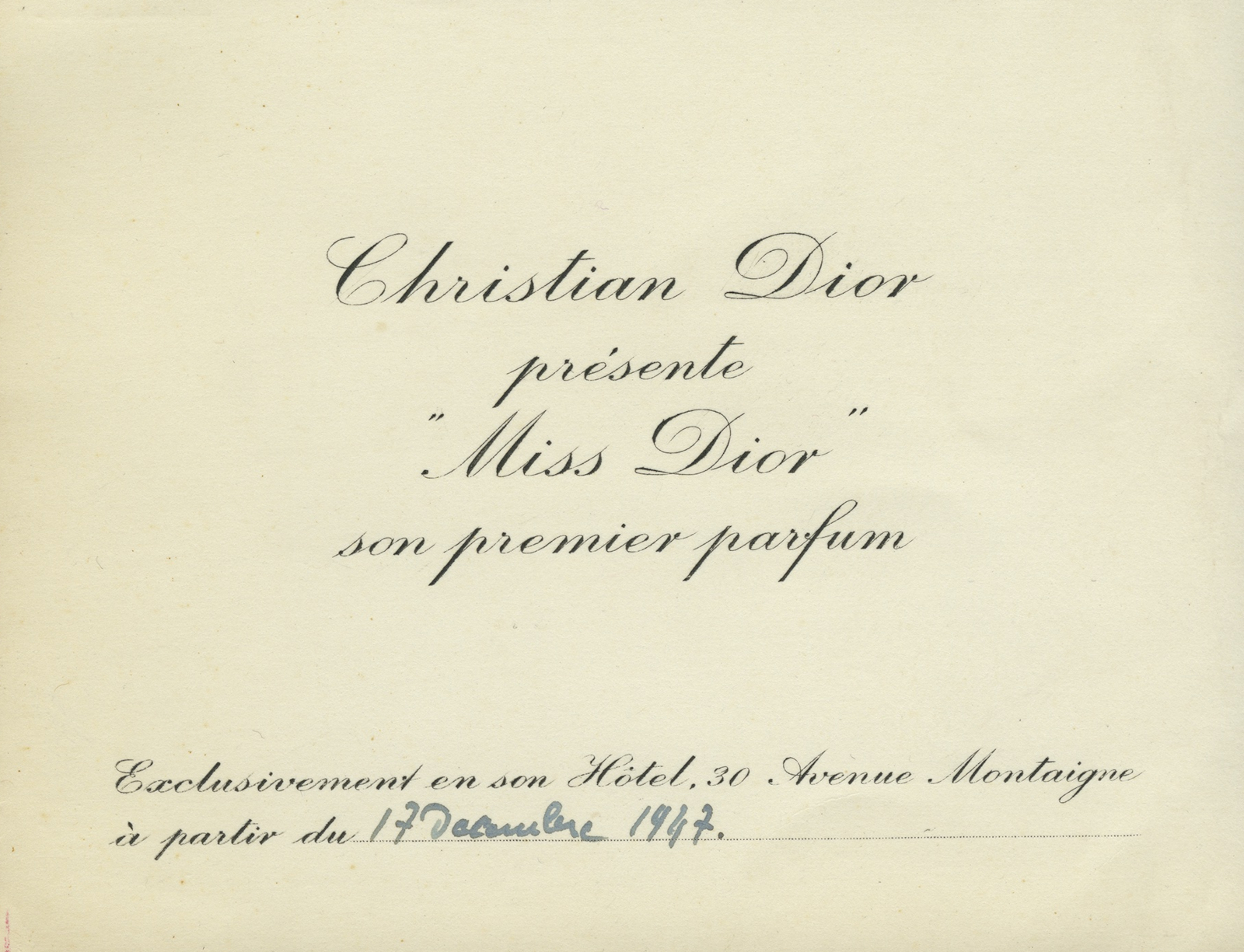
Invitation card for the launch of Miss Dior perfume in December 1947
The name also had a personal significance. It referred to Catherine Dior (1917–2008), the designer’s younger sister, whose life and experiences during the Second World War formed an important part of the family history behind the fragrance. Catherine was a member of the French Resistance and later became a horticulturalist specialising in flowers. Christian Dior’s attachment to her and to the gardens of the French region of Grasse contributed to the perfume’s enduring floral associations.
Miss Dior established the creative principle that would guide the house’s perfumery: fragrance was not merely an accessory to fashion but an independent expression of its aesthetic. Dior described himself as both a couturier and a perfumer, and the original Miss Dior translated the structured elegance of his clothing into a composition built around contrasting green, floral and earthy accords.
The Original Composition and Its Olfactory Character
The original Miss Dior is generally classified as a green chypre fragrance. Its construction combines fresh citrus notes with a floral heart and a mossy, earthy base, creating a more structured and sophisticated profile than a straightforward floral perfume.
The composition’s identity rests on the contrast between luminous flowers and darker, more persistent materials. Jasmine and other floral facets contribute elegance, while patchouli provides an earthy depth. The chypre structure gives the perfume definition and a distinctive dry-down, linking it to a major tradition in twentieth-century French perfumery.
Dior’s retrospective account of the original fragrance emphasises the balance of “citrus fruits, flowers and patchouli.” The house also associates the perfume’s inspiration with the jasmine and roses of Grasse, although the precise formula of the original 1947 release should not be assumed to be identical to that of any modern product carrying the Miss Dior name.
The original fragrance subsequently became the foundation for numerous reinterpretations. As regulations, available ingredients, consumer preferences and the commercial strategy of the house changed, the Miss Dior name came to encompass different concentrations, reformulations and related fragrances rather than one unchanged formula.
The Original Miss Dior and Its Successive Versions
During the decades following its debut, Miss Dior was presented in different concentrations and bottle designs. The original fragrance’s identity became closely associated with Dior’s couture aesthetic, particularly the houndstooth motif and decorative bow that would recur in later packaging.
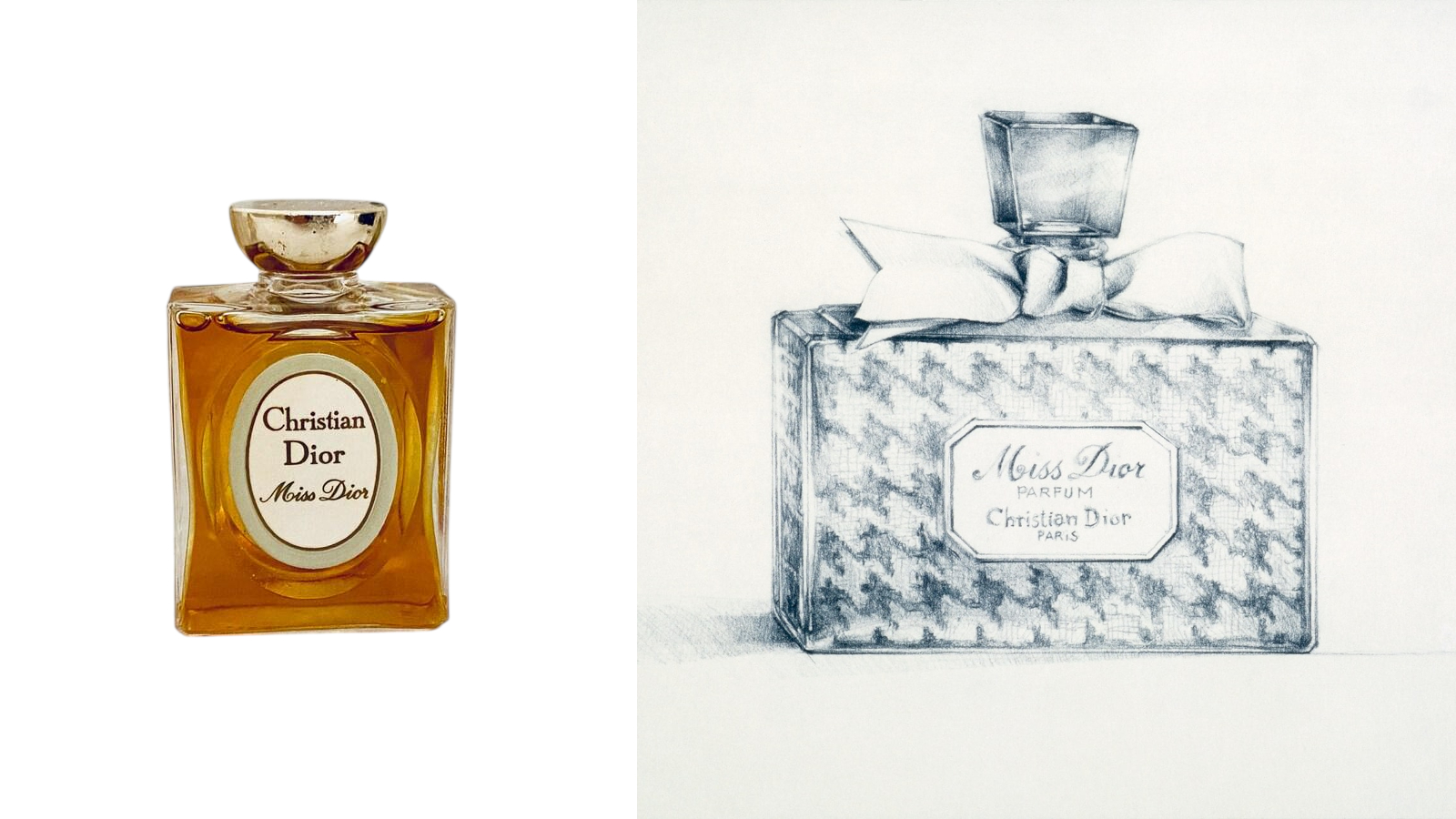
The original Miss Dior perfume bottles, introduced in 1947–1948, established the fragrance’s visual identity alongside Christian Dior’s post-war couture creations
The original formula is now distinguished from the modern fragrance line through the names Miss Dior Original and Miss Dior Originale, used in different markets and periods. These names help distinguish the heritage chypre from later perfumes that adopted the Miss Dior name following reformulations and changes in branding.
This distinction is particularly important because the modern Miss Dior Eau de Parfum is not simply a continuation of the original 1947 composition. The name has been applied to substantially different olfactory interpretations over time.
Miss Dior Chérie (2005): A New Generation
A major turning point came in 2005 with the launch of Miss Dior Chérie, a younger, more playful interpretation of the house’s fragrance identity. Created by perfumer Christine Nagel, the Eau de Parfum was developed during John Galliano’s tenure as Dior’s creative director.
Unlike the green, restrained chypre of 1947, Miss Dior Chérie embraced the gourmand trend that had gained momentum in modern perfumery. Its composition combined mandarin and strawberry with jasmine, violet, caramelised popcorn, caramel, patchouli and musk. The unusual popcorn accord, together with its sweet, fruity character, distinguished it from the original Miss Dior and helped establish the fragrance as a recognisable creation in its own right.
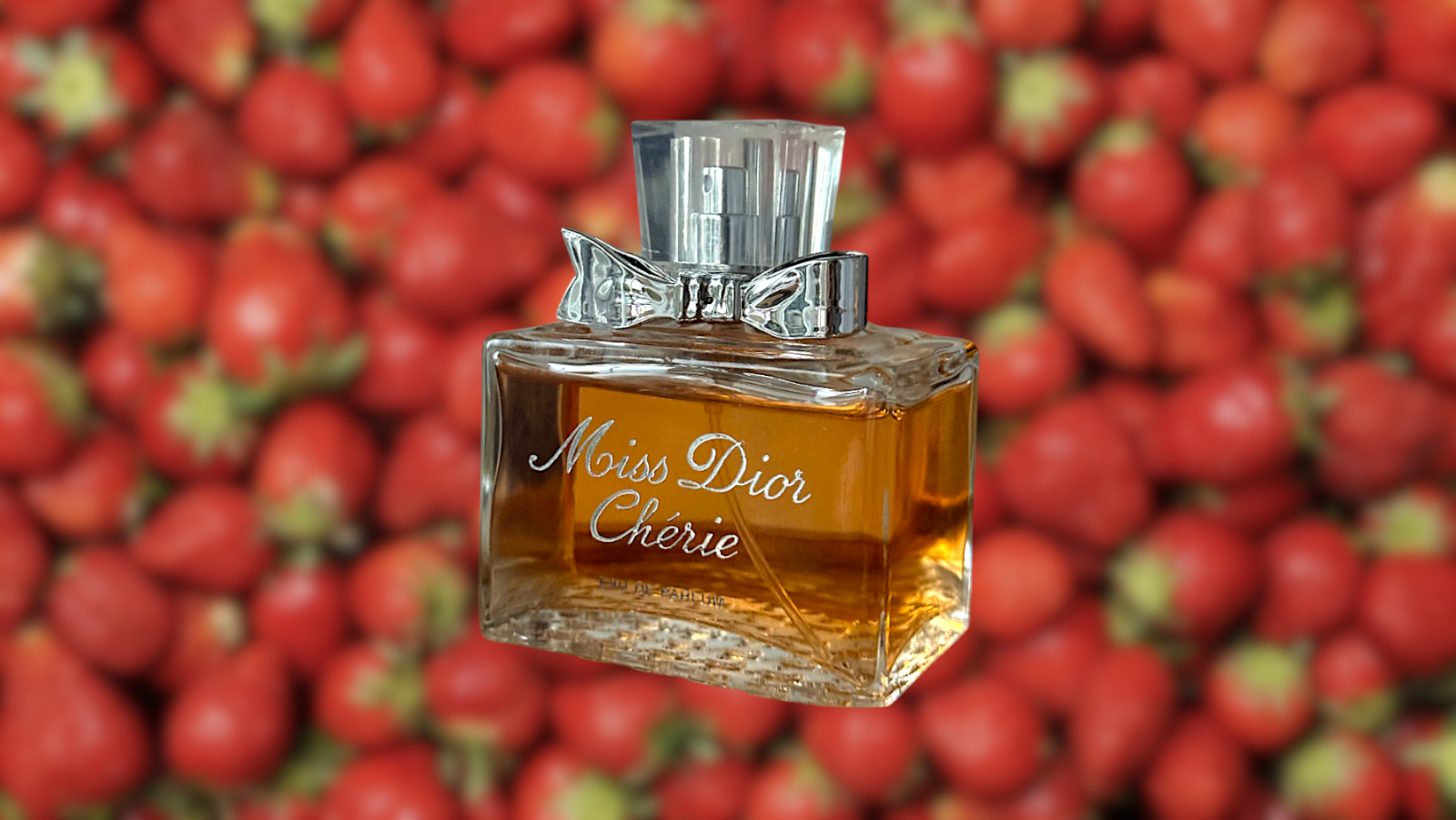
Miss Dior Chérie, launched in 2005, marked a shift towards a younger fruity-gourmand interpretation of the Miss Dior fragrance identity
The line subsequently expanded with additional interpretations, including an Eau de Toilette and Miss Dior Chérie L’Eau, introduced in 2009. These releases explored lighter, fresher floral territory while retaining the youthful positioning of the Chérie collection.
Miss Dior Chérie also marked a change in the way the house addressed its audience. Whereas the original fragrance was closely tied to couture and post-war femininity, Chérie adopted a more contemporary image of youth, romance and Parisian spontaneity.
The 2011–2012 Name Change and Reformulation
In 2011, Dior significantly revised Miss Dior Chérie Eau de Parfum under in-house perfumer François Demachy. The new composition retained elements of its predecessor’s fruity-floral character but was presented as more refined and less overtly gourmand.
In 2012, the Chérie name was dropped, and the reformulated fragrance became Miss Dior Eau de Parfum. Meanwhile, the historic 1947 fragrance was distinguished by the name Miss Dior Originale in relevant markets. The result was a potentially confusing situation in which the modern Miss Dior name referred to a fragrance descended from Chérie rather than the original green chypre.
The Modern Miss Dior Line
Miss Dior Eau de Parfum (2017 and 2021)
The modern Eau de Parfum underwent further revisions. The 2017 version, associated with the house’s renewed emphasis on the original fragrance’s floral heritage, was developed by François Demachy. Its composition centred on Grasse rose and damask rose, supported by a fresh, fruity opening and a woody base. The perfume presented rose as a contemporary, vibrant material rather than merely a traditional romantic floral note.
A further version appeared in 2021, again under Demachy. Its floral character was built around centifolia rose, with notes of lily of the valley, peony, iris and powdery woods contributing to the composition’s softer, more enveloping profile. The 2021 release also introduced a redesigned bottle featuring a more pronounced houndstooth motif and the characteristic bow.
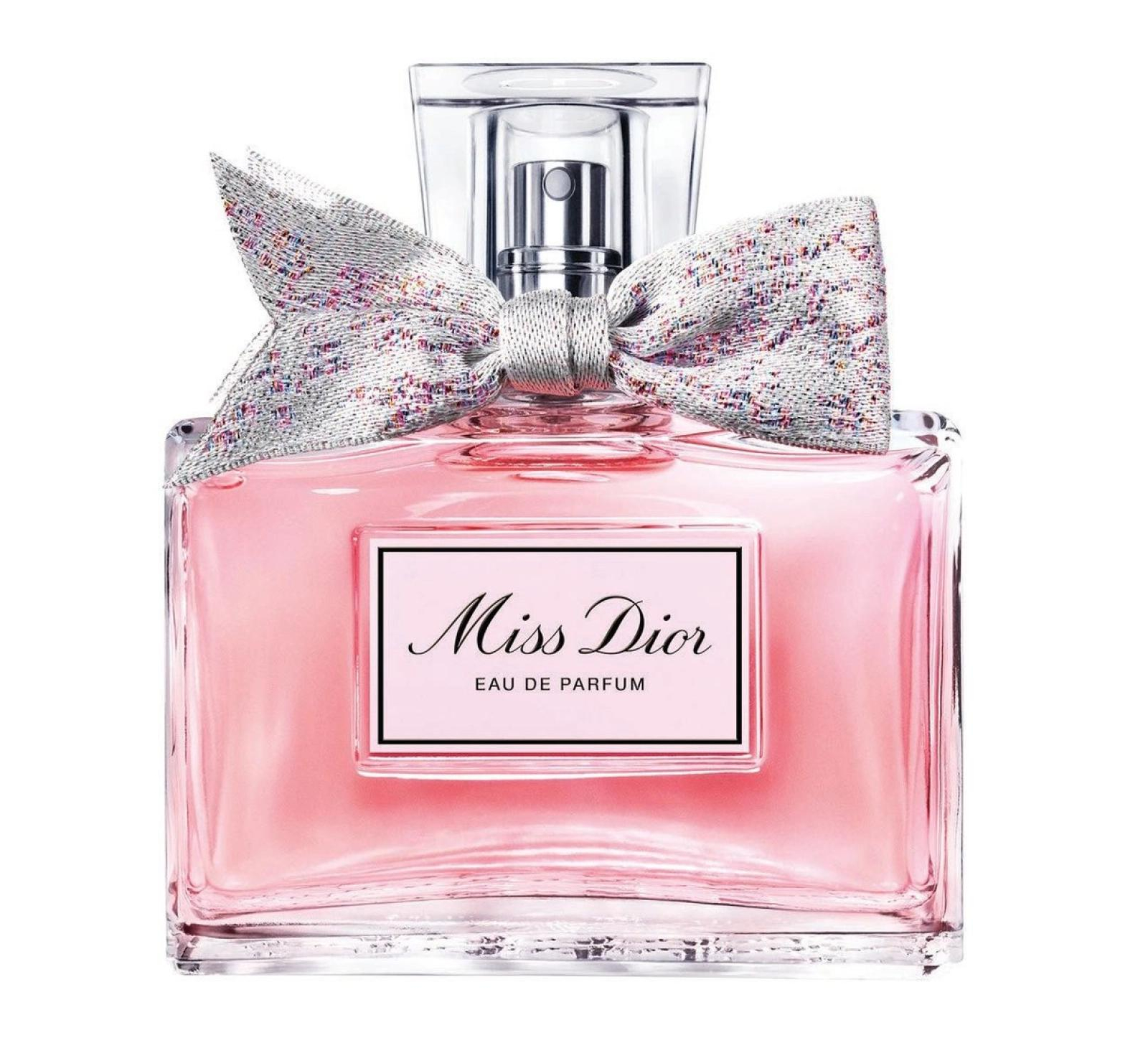
The 2021 Miss Dior Eau de Parfum, created by François Demachy, reinterpreted the line’s floral signature around rose and a softer, more enveloping woody accord
These successive editions illustrate the difference between maintaining a fragrance’s identity and preserving its exact formula. Dior continued to foreground rose, femininity and couture-inspired design, while adjusting the perfume’s structure and presentation for contemporary audiences.
Miss Dior Blooming Bouquet
Miss Dior Blooming Bouquet represents the lighter, more delicate side of the collection. Introduced in the 2000s and subsequently developed through later editions, it is an Eau de Toilette associated with a fresh, airy floral style.
Its modern composition combines peony and rose with a soft musky background, emphasising the impression of a fresh floral bouquet rather than the deeper chypre structure of the original Miss Dior. Blooming Bouquet has become one of the line’s principal interpretations for consumers seeking a lighter fragrance.
The name also preserves a connection with the earlier Miss Dior Chérie Blooming Bouquet, illustrating how Dior has repeatedly reused and reorganised fragrance names as the collection evolved.
Miss Dior Parfum (2024)
In 2024, Francis Kurkdjian, Dior’s Perfume Creation Director, introduced a new Miss Dior Parfum. The launch represented another reinterpretation of the original fragrance’s heritage rather than a recreation of its historical formula.
Kurkdjian’s composition combines bright mandarin with a fruity, rosy interpretation of star jasmine and an enveloping woody-amber base. Dior describes the fragrance as a blend of fruity-floral accords and amber woods, with jasmine serving as a link to the 1947 perfume.
Kurkdjian explained his approach as an attempt to capture contemporary youth through fragrance: “Envisioning a new Miss Dior is a desire to capture the youth of its time in a scent.” The statement reflects the principle that has guided the line since its inception: the perfume should retain a recognisable connection with the house while expressing the sensibilities of a new generation.
Miss Dior Essence (2025)
In 2025, Dior expanded the line with Miss Dior Essence, also created by Francis Kurkdjian. Positioned as a highly concentrated, intense floral-woody fragrance, it combines a jammy blackberry accord and elderflower with jasmine sambac and dense oak woods.
The composition moves the collection toward a richer, more saturated interpretation of floral perfumery. The fruity opening contrasts with the floral heart, while the woody base gives the fragrance depth and persistence. Dior describes it as a modern chypre, linking the release conceptually with the original Miss Dior while using a markedly different palette of materials.
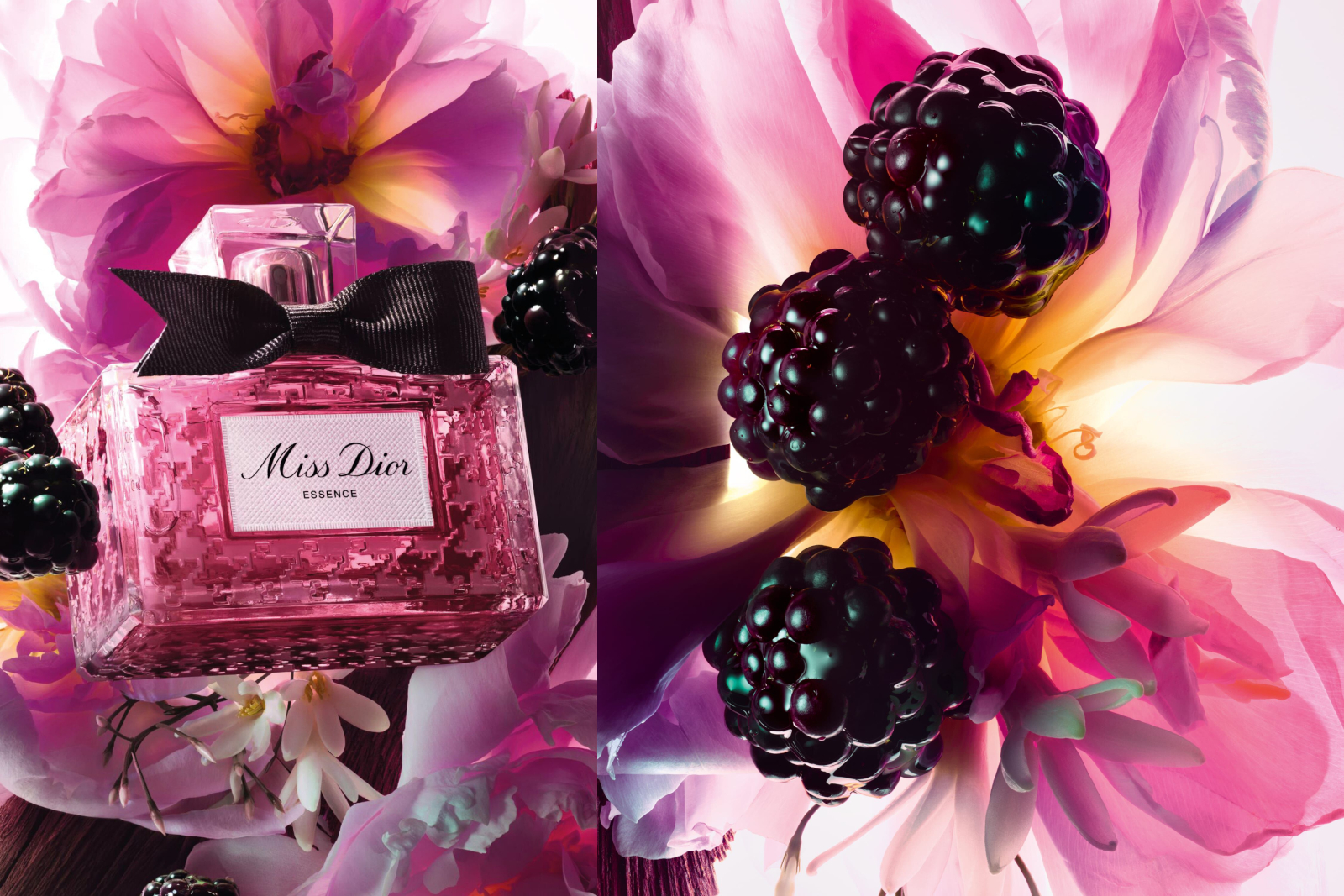
Miss Dior Essence, launched in 2025, combines a blackberry and elderflower accord with jasmine sambac and deep woody notes
The bottle also revisits the line’s heritage. Its frosted houndstooth pattern and black grosgrain poignard bow reference the original bottle design created by Christian Dior in 1948, translating an archival motif into a contemporary luxury object.
Advertising and Visual Identity
From Couture Presentation to Fashion Campaigns
Miss Dior’s original launch was itself a form of advertising. By spraying the perfume throughout the salons during the February 1947 fashion show, Dior integrated fragrance into the presentation of the New Look. The perfume became part of the sensory identity of the collection, rather than a separate product introduced through conventional retail promotion.
Subsequent advertising developed the relationship between the fragrance and the visual language of the fashion house. Illustrations, elegant bottle designs and floral imagery reinforced Miss Dior’s association with French couture.
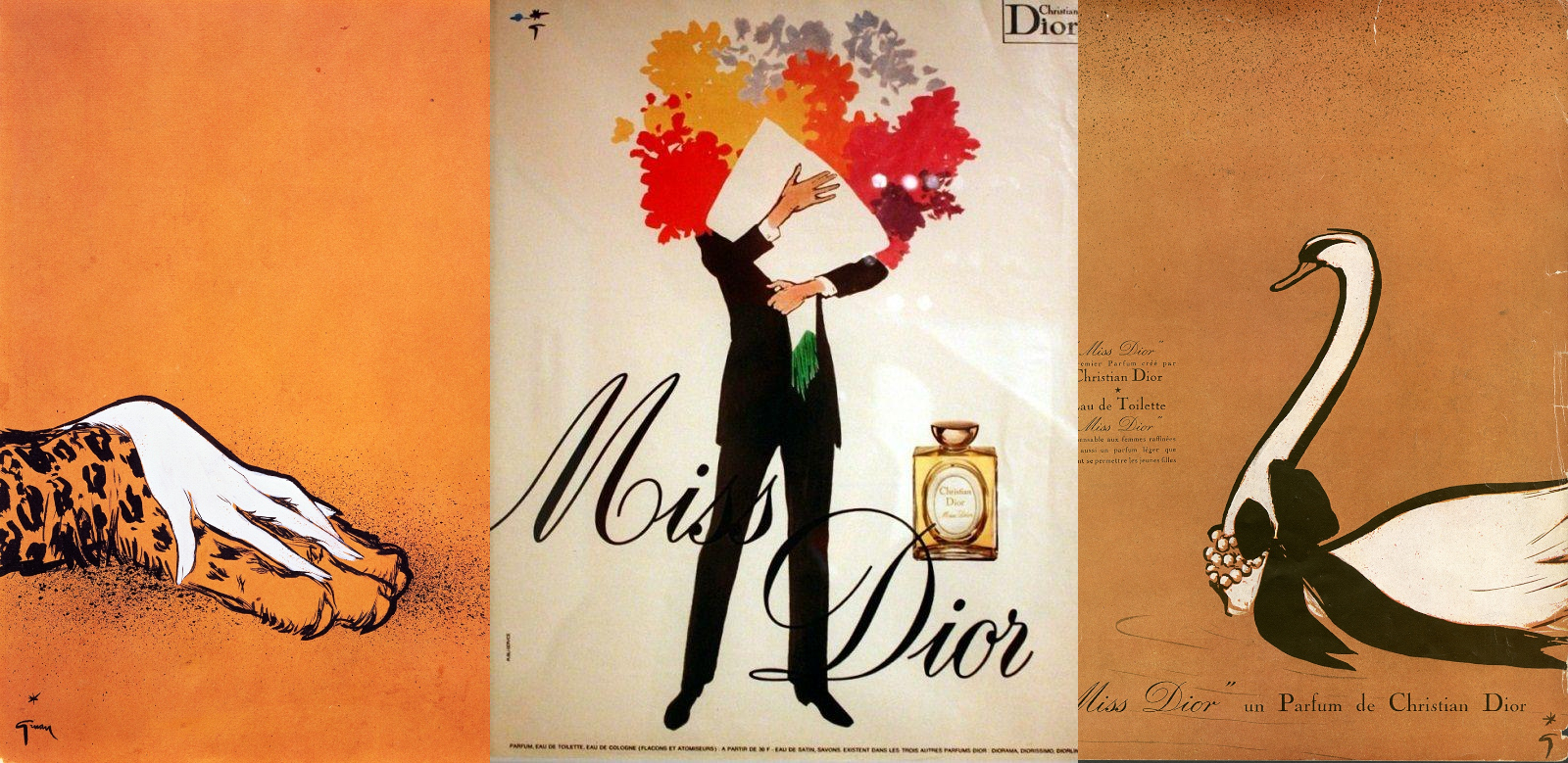
René Gruau’s illustrations for Miss Dior advertising, circa 1949
The recurring bow and houndstooth pattern helped establish visual continuity even as the formulas and names changed.
Miss Dior Chérie and Sofia Coppola
The Miss Dior Chérie campaigns of the 2000s adopted a more youthful and playful aesthetic. A particularly memorable campaign was directed by Sofia Coppola and featured model Maryna Linchuk. Its imagery evoked an idealised Parisian fantasy, with a young woman moving through the city and its skies amid balloons and pastel colours.
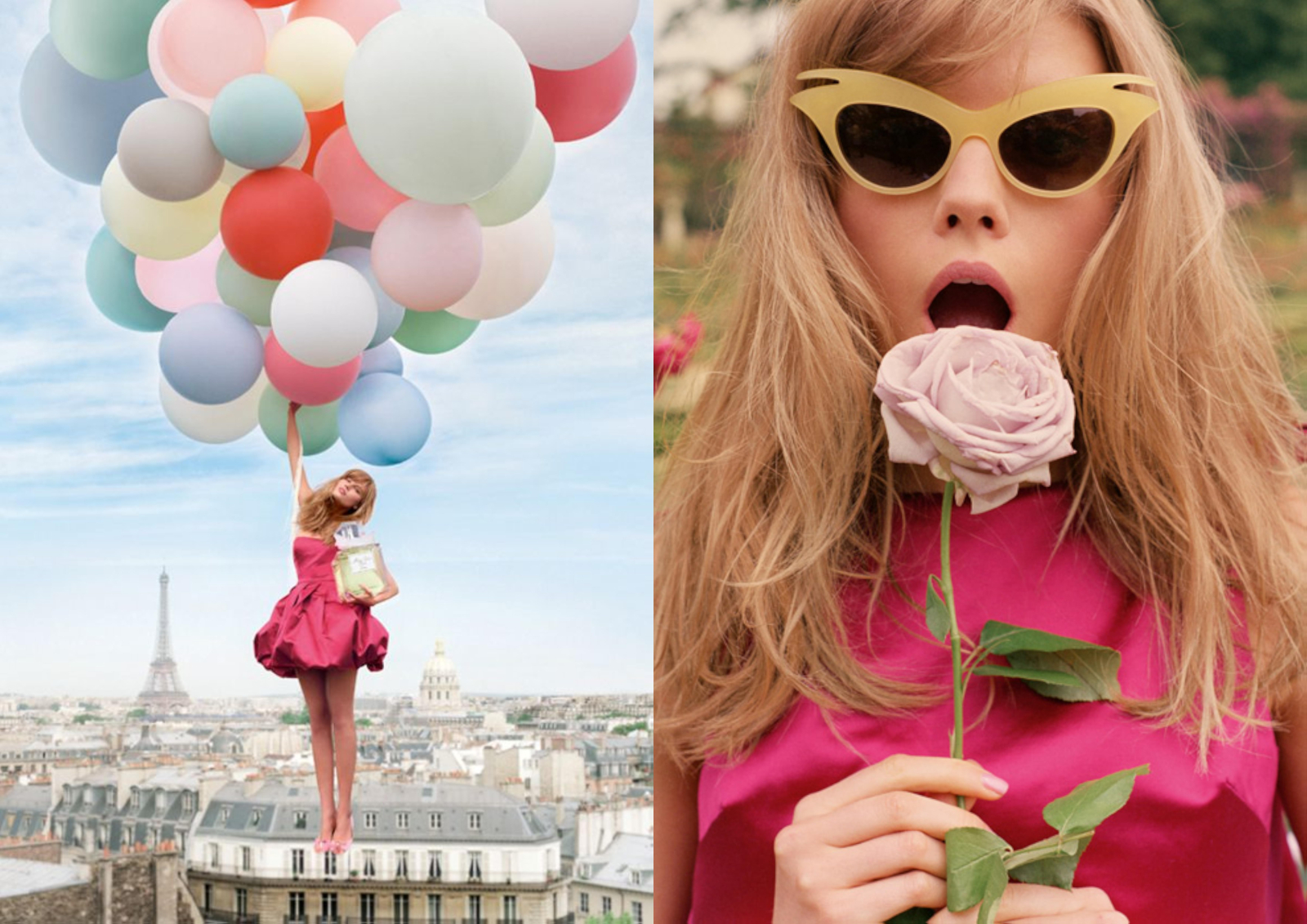
Model Maryna Linchuk in the 2008 Miss Dior Chérie campaign directed by Sofia Coppola. Pastel colours, balloons and Parisian imagery reflected the fragrance’s youthful and playful positioning
The campaign’s use of Brigitte Bardot’s song “Moi Je Joue” reinforced its playful, flirtatious mood. This visual approach contrasted with the more formal couture associations of the original Miss Dior and supported Chérie’s positioning as a modern fragrance for a younger audience.
Natalie Portman and the Modern Campaigns
Natalie Portman became the face of Miss Dior in 2010 and has remained closely associated with the fragrance in subsequent campaigns. Her involvement accompanied the transition from Miss Dior Chérie to the modern Miss Dior Eau de Parfum, giving the line a consistent public figure through successive creative and olfactory changes.
The 2017 campaign presented the fragrance in the context of a more complex vision of femininity. Portman’s association with the house extended across multiple creative directors, and the campaign framed Miss Dior as an expression of contemporary women rather than simply an emblem of youthful romance.
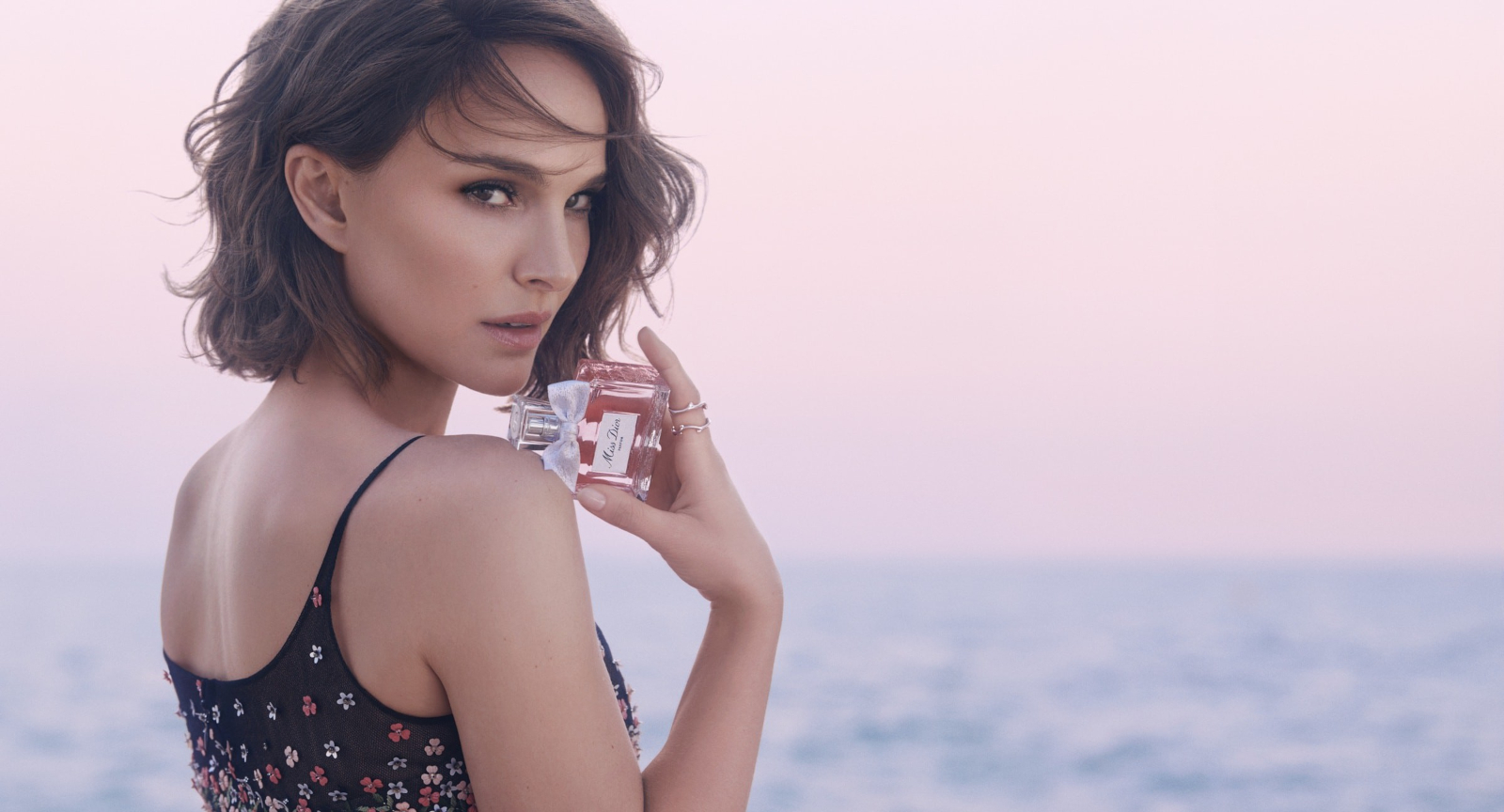
Natalie Portman, the modern face of Miss Dior fragrance line
In the following years, Dior continued to combine cinematic storytelling, fashion imagery and floral symbolism. The campaigns retained romance as a central theme while broadening the portrayal of the wearer to include independence, spontaneity and self-expression.
The 2024 Parfum and 2025 Essence launches continued this strategy, using Natalie Portman’s established association with the fragrance to connect new compositions with the collection’s long history. The house’s more recent storytelling also explicitly revisits Catherine Dior, the Grasse flower-growing tradition and Christian Dior’s original ambition to create a perfume that smelled of love.
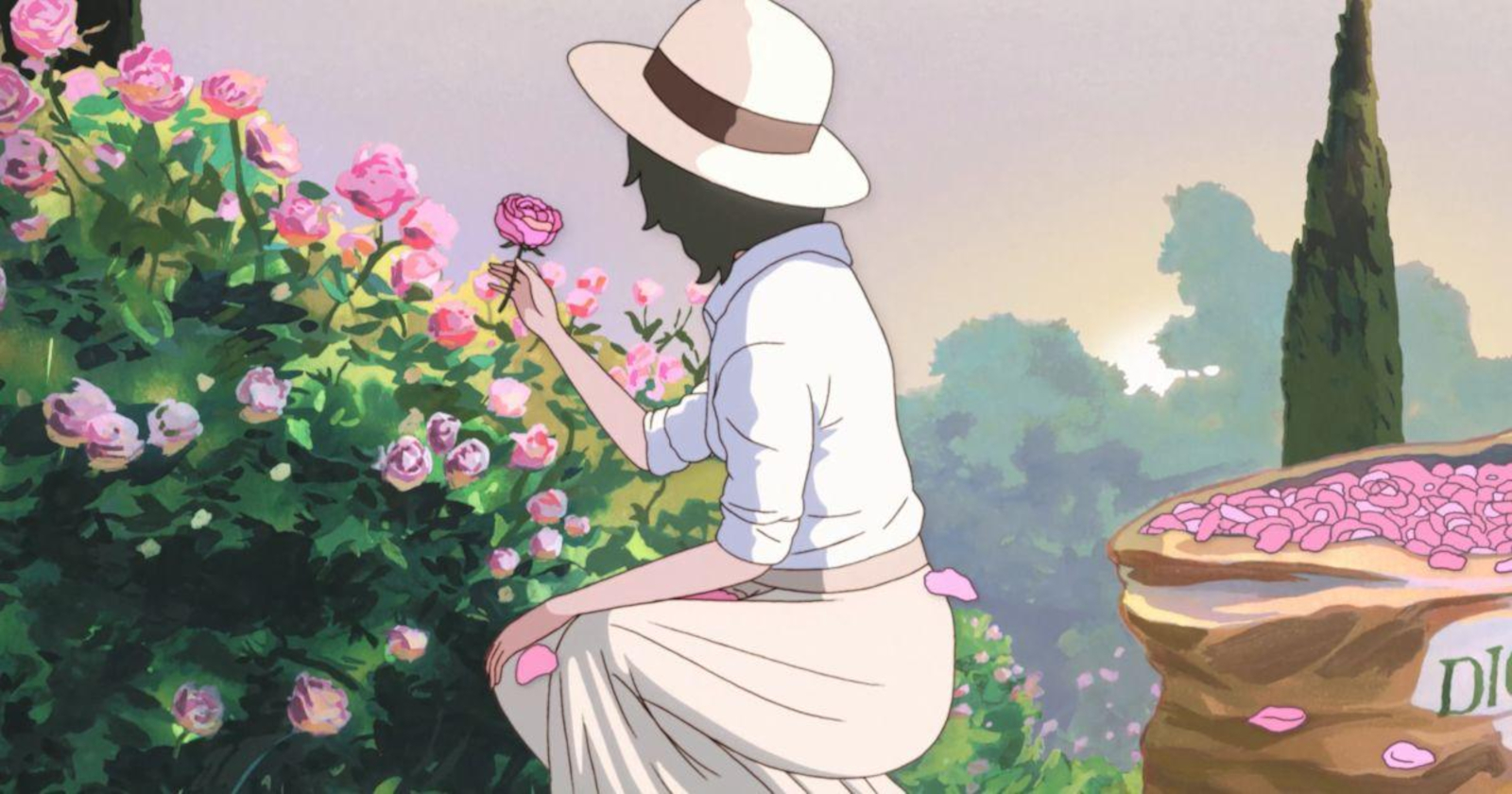
Dior’s animated film recounts the history of Miss Dior, connecting the fragrance’s origins with Christian Dior’s love for his sister Catherine and his passion for the flowers of Grasse
Legacy
Miss Dior occupies a distinctive position in the history of designer perfumery because it was introduced as an integral part of a fashion collection and subsequently developed into a multi-fragrance line. Its history encompasses the original green chypre of 1947, the gourmand modernity of Miss Dior Chérie, the floral reinterpretations of the 2010s and the more concentrated, fruity-woody compositions introduced under Francis Kurkdjian.
The line’s continuity lies less in a single unchanging formula than in its recurring themes: floral richness, a connection with French couture, the symbolism of the bow and the house’s insistence that fragrance should express the spirit of its time. Its successive reformulations and changes of name also make Miss Dior an instructive example of how a historic perfume identity can evolve while retaining the commercial and cultural significance of its original name.